
Remodeling Cost Per Square Foot in Virginia (Complete Guide – 2026)
Estimating remodelling costs per square foot is one of the most effective ways to plan a renovation budget. In Virginia, pricing varies based on location, property age, project complexity, and finish quality. This guide outlines realistic 2026 cost ranges and how to calculate your expected investment.
Average Remodeling Cost Per Square Foot in Virginia
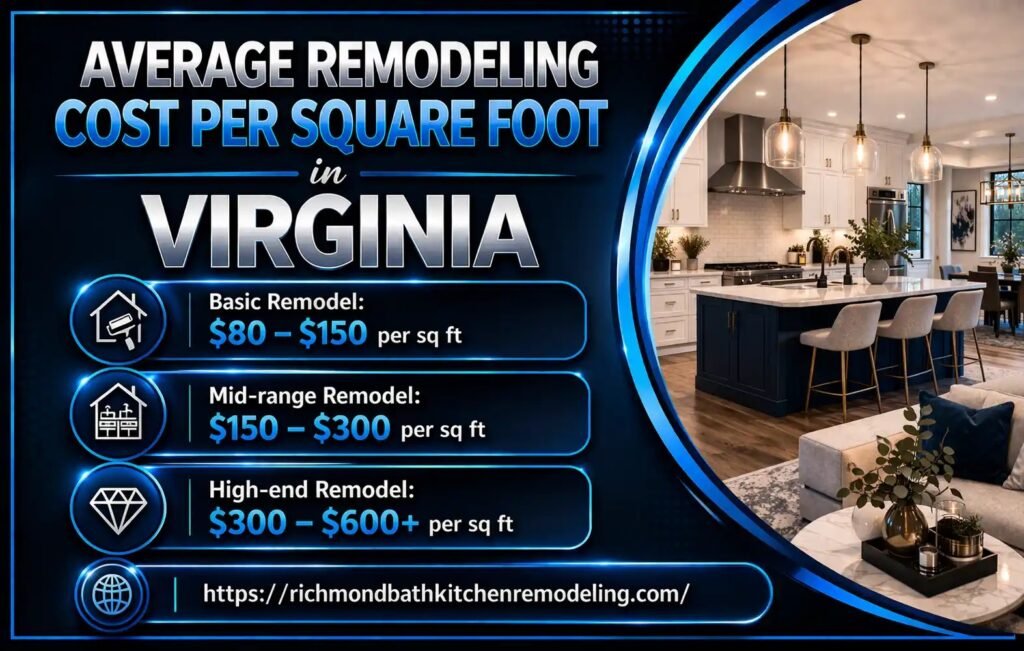
Across Virginia, homeowners typically spend:
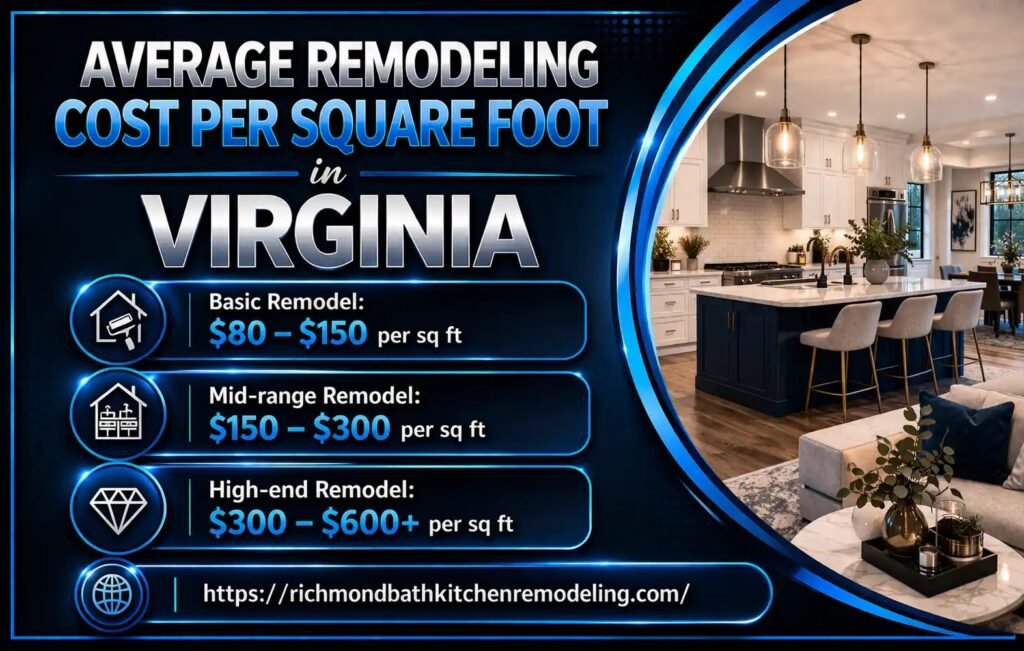
- Basic remodel: $80 – $150 per sq ft
- Mid-range remodel: $150 – $300 per sq ft
- High-end remodel: $300 – $600+ per sq ft
Urban areas like Northern Virginia and Richmond often fall on the higher end due to labor demand and permit requirements.
Remodeling Costs by Project Type
Kitchen Remodeling
- $150 – $400 per sq ft
- High-end kitchens can exceed $500 per sq ft
Kitchen remodeling involve cabinetry, appliances, plumbing, and electrical work, making them one of the most expensive spaces.
Bathroom Remodeling
- $120 – $400 per sq ft
- Luxury bathrooms: $400 – $700+ per sq ft
Labor-intensive tasks like tiling and waterproofing increase costs.
Basement Finishing
- $80 – $200 per sq ft
Costs depend on insulation, flooring in Richmond, and whether plumbing is added.
Full Home Renovation
- $120 – $300 per sq ft
- High-end renovations: $300 – $500+ per sq ft
In full home renovations includes structural work, system upgrades, and full interior updates.
Cost Calculator (Simple Method)
Use this formula to estimate your remodeling budget:
Total Cost = Square Footage × Cost Per Sq Ft
Example:
- Home size: 1,800 sq ft
- Mid-range remodel: $200 per sq ft
Estimated Cost = 1,800 × 200 = $360,000
This gives a baseline before contractor estimates and design decisions.
Cost Breakdown by Category
1. Labor (40%–60%)
- Skilled trades
- Project management
- Installation and finishing
2. Materials (40%–60%)
- Custom Cabinets, flooring, fixtures
- Paint, tile, and finishes
3. Design & Permits (5%–10%)
- Architectural plans
- Engineering
- Local approvals
4. Unexpected Costs (10%–20%)
- Structural issues
- Mold or water damage
- Code upgrades
Factors That Affect Remodeling Costs in Virginia
1. Location
Costs are higher in cities like Richmond, Arlington, and Alexandria due to labor demand.
2. Age of the Home
Older homes often require electrical, plumbing, or structural updates.
3. Scope of Work
Cosmetic updates cost less than full renovations involving layout changes.
4. Material Selection
Premium materials significantly increase total cost.
5. Permit Requirements
Local regulations and inspections add time and cost.
Cost Differences: Urban vs Rural Virginia
- Northern Virginia: Highest costs due to demand and income levels
- Richmond: Moderate to high depending on neighborhood
- Rural areas: Lower labor costs but limited contractor availability
Several factors have pushed labour costs higher in recent years:
How to Estimate Your Remodeling Budget Accurately
- Measure your space correctly
- Choose a realistic cost tier (basic, mid, high-end)
- Add 10%–20% contingency
- Get multiple contractor estimates
How to Control Remodeling Costs
- Keep existing layout where possible
- Use a mix of premium and standard materials
- Plan all details before construction begins
- Avoid mid-project changes
- Work with experienced contractors
Final Thoughts
Remodeling costs per square foot in Virginia provide a reliable starting point, but final pricing depends on design choices, labor complexity, and property condition.
For most homeowners, a mid-range budget of $150 to $300 per square foot offers a balance between quality and cost. Careful planning and professional guidance ensure your renovation stays within budget while delivering long-term value.
Budget for remodeling in Richmond VA https://richmondbathkitchenremodeling.com/remodeling-budget-richmond/
FAQs
What is the average remodeling cost per square foot in Virginia?
Most projects range from $150 to $300 per square foot for mid-range renovations.
Why do remodeling costs vary so much?
Costs depend on materials, labor, location, and the complexity of the project.
Is it cheaper to remodel or build new in Virginia?
Remodeling is often cheaper, but extensive renovations can approach new construction costs.
How much should I budget for unexpected costs?
Set aside 10%–20% of your total budget for unforeseen issues.