
Labor vs Material Costs in Remodeling: What You’re Really Paying For
When budgeting for a remodelling project, most homeowners focus on visible elements like cabinets, tiles, or fixtures. However, a significant portion of your investment goes into labour, often more than materials. Understanding how costs are distributed helps you plan realistically and avoid surprises.
Average Split: Labor vs Material Costs
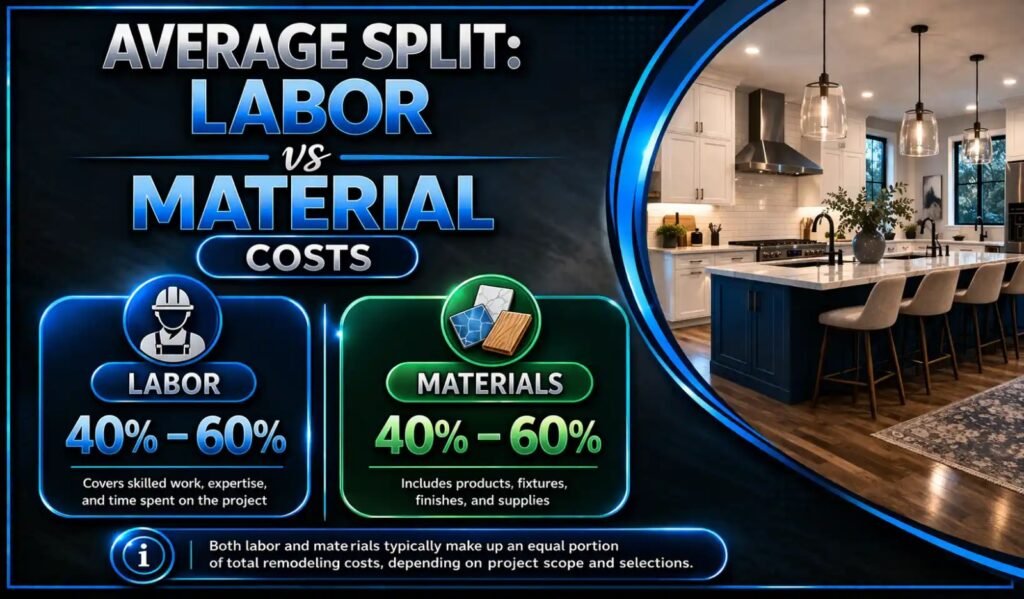
In most remodelling projects, the cost distribution looks like this:
- Labor: 40% – 60%
- Materials: 40% – 60%
The ratio shifts depending on project type, complexity, and finish level.
General Rule:
- High customization = higher labor cost
- High-end finishes = higher material cost
What Labor Costs Actually Include
Labour is not just “paying workers”. It covers skilled expertise, coordination, and execution.
1. Skilled Trades
- Carpenters
- Electricians
- Plumbers
- Tile installers
Each trade brings specialised knowledge, especially important in older homes or complex layouts.
2. Project Management
- Scheduling subcontractors
- Coordinating inspections
- Managing timelines
This ensures the project runs efficiently and avoids delays.
3. Demolition & Preparation
- Removing existing structures
- Site preparation
- Waste disposal
This phase is labour-heavy but often overlooked in budgeting.
4. Installation Work
- Cabinet installation
- Flooring and tile work
- Fixture fitting
Precision matters here, especially for long-term durability.
5. Compliance & Safety
- Meeting building codes
- Passing inspections
- Ensuring structural safety
This reduces future legal and safety risks.
What Material Costs Include
Material costs cover all physical components used in the remodel.
1. Core Materials
2. Fixtures & Appliances
- Sinks, faucets, toilets
- Kitchen appliances
- Lighting fixtures
3. Finishes
- Paint
- Tiles
- Hardware
4. Structural Materials
- Lumber
- Insulation
- Concrete
Cost Comparison by Project Type
Kitchen Remodeling
- Labor: 35% – 50%
- Materials: 50% – 65%
Reason: Cabinets, appliances, and countertops are expensive.
Bathroom Remodeling
- Labor: 50% – 65%
- Materials: 35% – 50%
Reason: Plumbing, tile work, and waterproofing require intensive labour.
Full Home Renovation
- Labor: 40% – 55%
- Materials: 45% – 60%
Balanced distribution due to mixed scope.
Why Labor Costs Are Increasing
Several factors have pushed labour costs higher in recent years:
1. Skilled Labor Shortage
Fewer qualified tradespeople increases demand and pricing.
2. Project Complexity
Modern designs require precision and specialised skills.
3. Code Requirements
Stricter building codes increase time and expertise needed.
4. Time Sensitivity
Faster project timelines often require larger crews.
Hidden Costs Within Labor and Materials
Labor-Related Hidden Costs
- Rework due to design changes
- Delays from poor scheduling
- Unexpected structural issues
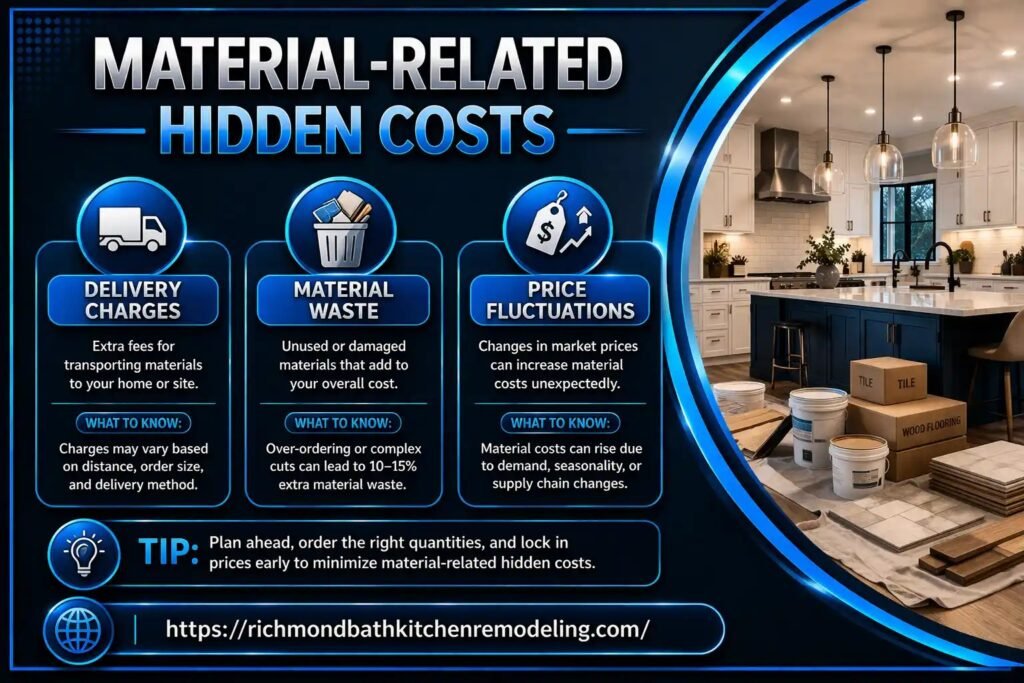
Material-Related Hidden Costs
- Delivery charges
- Material waste
- Price fluctuations
How to Balance Labor and Material Costs
- Avoid frequent design changes during construction
- Choose durable materials that reduce long-term maintenance
- Keep the layout consistent to reduce labor complexity
- Work with experienced contractors to avoid costly errors
- Mix premium and standard materials strategically
Common Misconception
Many homeowners assume materials make up most of the cost. In reality, labour often equals or exceeds material costs, especially in bathrooms renovation and complex renovations.
Cutting labour costs by hiring inexperienced contractors can lead to poor workmanship, repairs, and higher long-term expenses.
Final Thoughts
Remodelling costs are not just about what you see. Labour represents expertise, coordination, and execution, while materials represent quality and aesthetics. Both are equally important.
Understanding this balance allows you to allocate your budget wisely and make informed decisions that improve both functionality and long-term value.
FAQs
What costs more in remodelling: labour or materials?
It depends on the project, but labour often equals or exceeds material costs, especially in bathrooms and complex renovations.
Why is labour so expensive in remodelling?
Labour includes skilled trades, project management, and compliance with building codes, all of which require expertise and time.
Can I reduce labour costs?
Yes, by keeping the layout unchanged, planning thoroughly, and avoiding mid-project changes.