
Why Remodeling Projects Go Over Budget (And How to Prevent It)
Home remodeling can significantly improve your space but going over budget is one of the most common challenges homeowners face. Without proper planning, costs can quickly spiral out of control.
Understanding the reasons behind budget overruns and how to prevent them can save you time, money and stress.
Why Remodeling Projects Go Over Budget
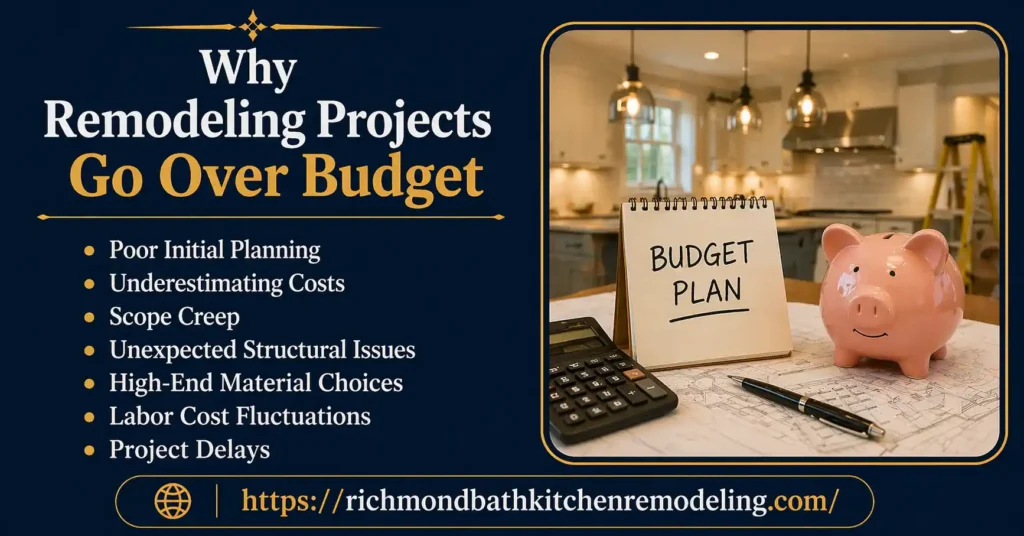
1. Poor Initial Planning
Many homeowners start without a detailed plan, leading to unexpected decisions during construction. Last-minute changes often increase both labor and material costs.
2. Underestimating Costs
One of the biggest mistakes is setting an unrealistic budget. Hidden expenses like permits, labor and materials are often overlooked.
3. Scope Creep
Adding new features mid-project like upgrading materials or expanding the design can quickly push costs beyond the original estimate.
4. Unexpected Structural Issues
Hidden problems such as:
- Water damage
- Mold
- Outdated wiring or plumbing
These issues are common in older homes and require immediate attention, increasing costs.
5. High-End Material Choices
Switching to premium finishes, custom cabinets or luxury fixtures during the project can significantly raise expenses.
6. Labor Cost Fluctuations
Labor costs can increase due to project complexity, delays or contractor availability.
7. Project Delays
Delays caused by material shortages, weather or scheduling conflicts can lead to higher labor and rental costs.
How to Prevent Budget Overruns
1. Set a Realistic Budget
Base your budget on:
- Home value
- Project scope
- Local market costs
Always include a 10%–20% contingency fund.
2. Finalize Plans Before Starting
Avoid making design changes once construction begins. Clear plans reduce confusion and extra costs.
3. Prioritize Needs Over Wants
Focus on essential upgrades first then allocate remaining budget to aesthetic improvements.
4. Choose Materials Wisely
Mix premium and standard materials to balance cost and quality.
5. Work with Experienced Contractors
Hiring skilled professionals ensures accurate estimates, efficient work and fewer costly mistakes.
6. Stick to the Original Scope
Avoid adding new features during the project unless absolutely necessary.
7. Monitor Progress and Expenses
Avoid adding new features during the project unless absolutely necessary.
Smart Budgeting Example
For a $300,000 home:
- Planned remodel budget: $45,000 (15%)
- Contingency fund: $6,000 (approx. 13%)
- Total safe budget: $51,000
This approach helps absorb unexpected costs without financial strain.
Signs Your Project Is Going Over Budget
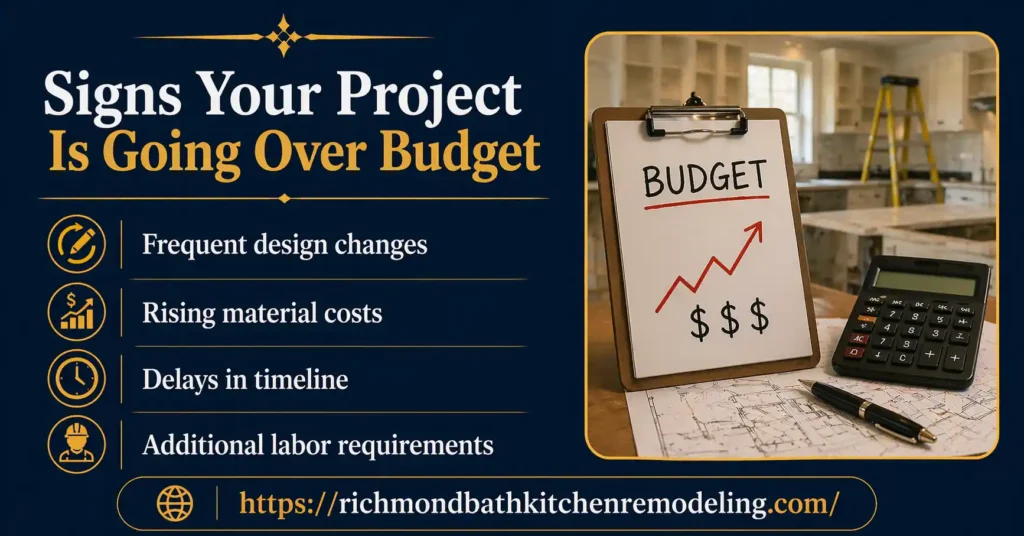
- Frequent design changes
- Rising material costs
- Delays in timeline
- Additional labor requirements
Catching these early can help you adjust before costs escalate further.
Conclusion
Remodeling projects often go over budget due to poor planning, unexpected issues and mid-project changes. However with a clear plan, realistic budget and experienced contractor, you can keep your renovation on track.
Careful preparation and disciplined decision-making are the keys to a successful and cost-effective remodel.
Do u know whiat is the most expensive part of remodel?https://richmondbathkitchenremodeling.com/expensive-part-of-remodel-richmond/
FAQs
Why do most remodeling projects go over budget?
Common reasons include poor planning, unexpected repairs, and adding new features during construction.
How much extra should I budget for unexpected costs?
You should set aside 10%–20% of your total budget as a contingency fund.
Can I stay within my remodeling budget?
Yes, by planning carefully, avoiding changes, and working with experienced contractors.
What is scope creep in remodeling?
It refers to adding extra features or changes after the project has started, increasing costs.
How do I control remodeling costs?
Finalize plans early, track expenses, and stick to your original budget and scope.