Can I Write Off Home Renovations on My Taxes?
In most cases, you cannot write off home renovations on your taxes if the work is for your personal residence.
Home improvements are usually not tax-deductible right away. However, some renovations may qualify for tax benefits in special situations.
In Richmond, VA, many homeowners ask this question before starting projects like kitchen remodeling, bathroom upgrades, or basement finishing.
When Are Home Renovations NOT Tax Deductible?
Most renovations are not deductible if:
- The home is your primary residence
- The project is for personal comfort or style
- You are upgrading appearance only
Examples that are usually not deductible:
These projects increase your home’s value but do not reduce your taxes immediately.
When CAN You Write Off Home Renovations?
You may qualify for tax benefits in these situations:
1. Home Office Renovations
If you use part of your home only for business, you may deduct renovation costs related to that space.
For example:
- Remodeling a dedicated home office
- Upgrading flooring in a business-only area
- Adding built-in storage for work use
The space must be used regularly and only for business.
2. Rental Property Renovations
If the property is a rental, renovation costs may be deductible.
Landlords in Richmond, VA can often deduct:
- Repairs
- Maintenance
- Some improvement costs (depreciated over time)
This does not apply to your personal home.
3. Energy-Efficient Upgrades
Some energy improvements may qualify for federal tax credits.
Examples:
- Energy-efficient windows
- Solar panels
- Insulation upgrades
- HVAC system improvements
These are tax credits, not standard deductions.
Always check current IRS rules before claiming.
4. Medical Necessity Renovations
Renovations may qualify if they are medically required.
Examples:
- Wheelchair ramps
- Walk-in tubs
- Widened doorways
The renovation must be medically necessary and documented by a doctor.
Do Renovations Help With Taxes Later?
Yes.
Even if you cannot deduct renovation costs now, improvements increase your home’s “cost basis.”
Cost basis means:
Home purchase price + renovation costs = adjusted value
When you sell your home, a higher cost basis can reduce capital gains tax.
This is important for homeowners doing large projects like home remodeling in Richmond, VA.
What Is the Difference Between a Repair and an
Improvement?
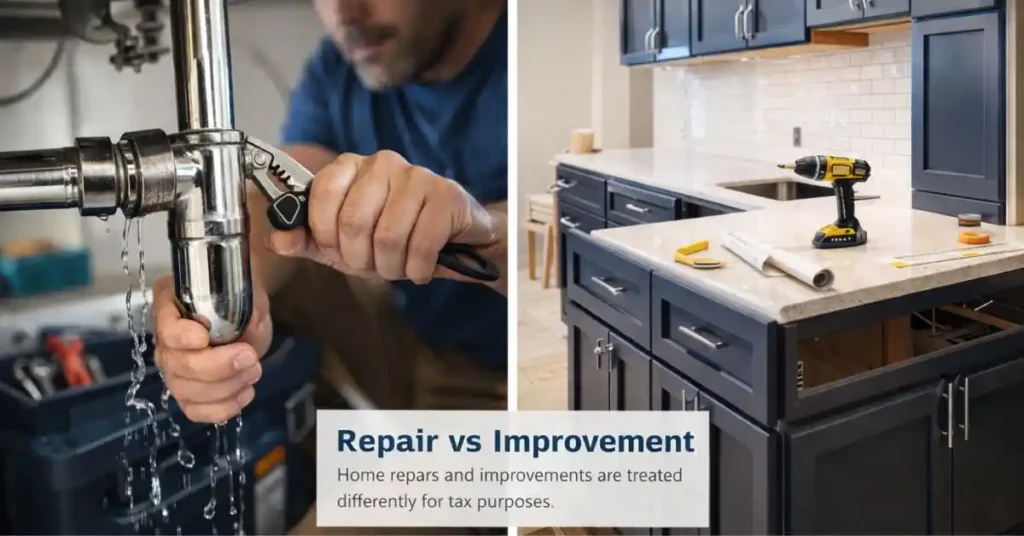
The IRS treats repairs and improvements differently.
Repairs:
- Fix something broken
- Maintain current condition
- Usually deductible for rentals only
Improvements:
- Add value
- Extend life of the property
- Adapt the home to new uses
Most remodeling projects are considered improvements.
Should I Talk to a Tax Professional?
Yes.
Tax laws change often. Before starting major projects like:
It is smart to speak with a tax advisor to understand your specific situation.
Most homeowners cannot write off home renovations on their taxes if the home is their primary residence.
However, tax benefits may apply if:
- The home is a rental
- The renovation is for business use
- The upgrade improves energy efficiency
- The renovation is medically necessary
Always confirm with a tax professional before claiming deductions.