
Step-by-Step Kitchen Remodeling Process (From Planning to Completion)
A kitchen remodel involves multiple phases, each requiring careful coordination. Contractors follow a structured workflow to manage cost, timeline, and quality. Understanding this process helps you plan efficiently and avoid delays.
When Remodeling Before Selling Makes Sense
You should consider remodeling if your home has:
1. Define Your Goals and Scope
Start by identifying what you want to achieve:
- Improve functionality
- Update design and appearance
- Increase home value
- Expand or reconfigure layout
Be specific about:
- Must-have features
- Budget range
- Timeline expectations
A clearly defined scope prevents costly changes later.
2. Set a Realistic Budget
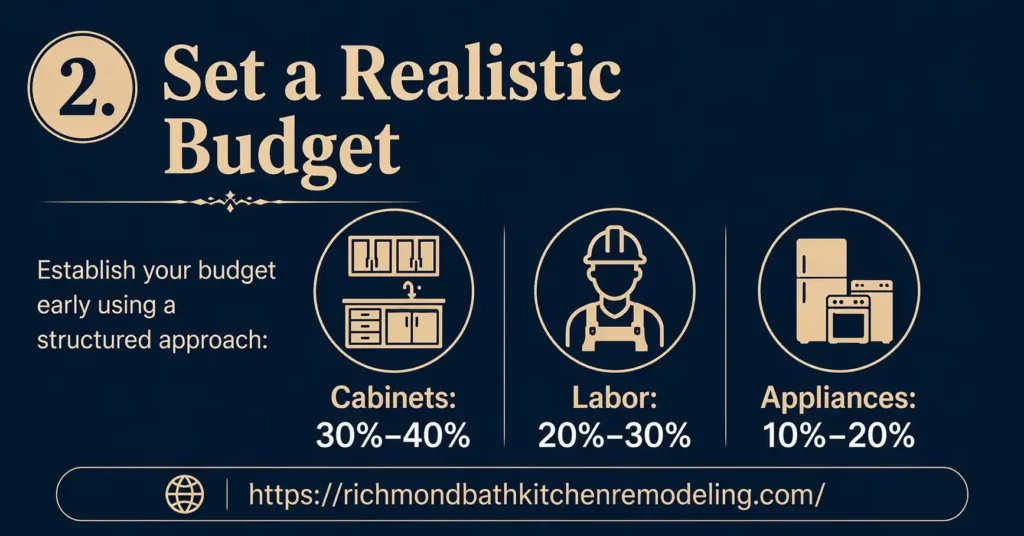
Establish your budget early using a structured approach:
- Cabinets: 30%–40%
- Labor: 20%–30%
- Appliances: 10%–20%
- Countertops, flooring, lighting: remaining portion
Always include a 10%–20% contingency for unexpected costs.
3. Kitchen Design and Planning
This phase converts ideas into actionable plans.
Key Elements:
- Layout (L-shape, U-shape, island, open concept)
- Storage solutions
- Appliance placement
- Lighting design
You may work with:
- A designer
- A contractor (design-build)
- An architect (for structural changes)
Detailed planning reduces errors during construction.
4. Hire the Right Contractor
Choosing the right professional is critical.
What to do:
- Get 2–3 quotes
- Compare scope, not just price
- Check previous work and references
- Confirm licenses and insurance
A good contractor ensures quality and keeps the project on schedule.
5. Obtain Permits and Approvals
Permits are required for:
- Electrical work
- Plumbing changes
- Structural modifications
Skipping permits can lead to fines and issues during resale.
6. Order Materials in Advance
Delays often happen due to material shortages.
Order early:
- Cabinets
- Appliances
- Countertops
- Fixtures
Custom items may take 6–12 weeks, so plan accordingly.
7. Demolition Phase
The existing kitchen is removed.
Includes:
- Cabinets and countertops removal
- Flooring removal
- Wall or structural demolition (if needed)
This stage can uncover hidden issues like water damage or outdated wiring.
8. Structural and System Work
Before finishing, core systems are updated.
Includes:
- Plumbing installation or relocation
- Electrical wiring and outlets
- HVAC adjustments
- Framing or wall modifications
This is one of the most critical phases for long-term functionality.
9. Installation Phase
Now the kitchen starts taking shape.
Sequence:
- Drywall and painting
- Flooring installation
- Cabinet installation
- Countertop fitting
- Appliance setup
- Lighting and fixtures
Proper sequencing avoids rework and delays.
10. Finishing Touches
Final details complete the project:
- Backsplash installation
- Hardware (handles, knobs)
- Trim and finishing work
- Final paint touch-ups
These elements define the overall look and quality.
11. Final Inspection and Walkthrough

Before completion:
- Inspect all installations
- Test appliances and fixtures
- Ensure code compliance
- Address any punch-list items
This ensures everything meets expectations.
12. Project Timeline Overview
Typical kitchen remodel duration:
- Planning & design: 2–6 weeks
- Permits & ordering: 2–8 weeks
- Construction: 4–10 weeks
Total timeline: 2–4 months (average)
Common Mistakes to Avoid
- Changing design mid-project
- Underestimating budget
- Delaying material orders
- Hiring based on lowest price only
- Ignoring contingency planning
These can lead to delays and increased costs.
Final Thoughts
A kitchen remodel is a structured process that moves from planning to execution in clearly defined stages. Following a step-by-step approach ensures better budget control, fewer delays, and higher-quality results.
The more detailed your planning phase, the smoother your construction phase will be.
Best kitchen remodeling contractors in Richmond VA
https://richmondbathkitchenremodeling.com/kitchen-remodeling-contractors/
FAQs
How long does a kitchen remodel take?
Most projects take 2 to 4 months from planning to completion.
What is the most important step in remodeling?
Planning and design are the most critical steps for avoiding costly mistakes.
Do I need permits for a kitchen remodel?
Yes, especially for electrical, plumbing, or structural work.
When should I order materials?
Before demolition begins to avoid delays.
Can I live in my home during the remodel?
Yes, but expect disruption, especially during demolition and installation phases.