
Tile vs Vinyl Flooring for Kitchen & Bathroom: Pros and Cons
Choosing between tile and vinyl flooring is a critical decision for kitchens and bathrooms. Both materials perform well in moisture-prone environments, but they differ significantly in durability, cost, comfort, and maintenance.
What Is Tile Flooring?
Tile flooring includes ceramic, porcelain, or natural stone, designed for durability and water resistance.
Key Features:
- Hard, dense surface
- Highly water-resistant
- Available in various textures and finishes
What Is Vinyl Flooring?
Vinyl flooring is a synthetic material, commonly available as luxury vinyl planks (LVP) or tiles (LVT), designed to mimic wood or stone.
Key Features:
- Flexible and softer underfoot
- 100% waterproof (in most modern options)
- Easy installation
Tile vs Vinyl: Side-by-Side Comparison
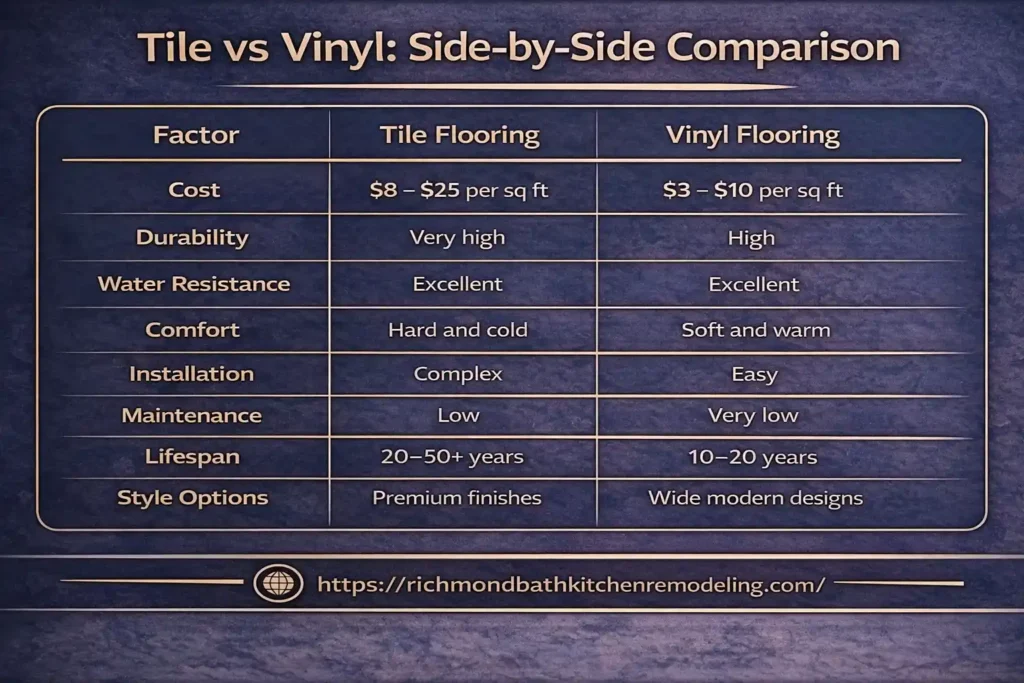
Factor
Tile Flooring
Vinyl Flooring
Cost
$8 – $25 per sq ft
$3 – $10 per sq ft
Durability
Very high
High
Water Resistance
Excellent
Excellent
Comfort
Hard and cold
Hard and cold
Installation
Complex
Easy
Maintanence
Low
Very Low
Life Span
20–50+ years
10–20 years
Style Options
Premium finishes
Wide modern designs
Pros and Cons of Tile Flooring
Advantages:
- Extremely durable and long-lasting
- Resistant to water, stains, and scratches
- Adds premium value to the home
- Ideal for high-moisture areas
Disadvantages:
- Higher installation cost
- Cold and hard underfoot
- Can crack if heavy objects are dropped
- Requires professional installation
Pros and Cons of Vinyl Flooring
Advantages
- Budget-friendly
- Comfortable and softer surface
- Easy and quick installation
- Waterproof and low maintenance
Disadvantages
- Shorter lifespan than tile
- Can dent or scratch over time
- Lower perceived value compared to tile
- May fade with prolonged sun exposure
Best Choice for Kitchens
Tile:
- Best for long-term durability
- Handles heavy foot traffic well
- Ideal for high-end kitchen designs
Vinyl
- Comfortable for standing long periods
- More budget-friendly
- Faster installation
Best Choice for Bathrooms
Tile:
- Preferred for showers and wet zones
- Superior moisture resistance
- Classic and premium look
Vinyl:
- Great for main bathroom floors
- Warmer and more comfortable
- Cost-effective option
Cost Comparison
Tile Flooring
- Material + installation: $8,000 – $20,000 (average kitchen/bath area)
Vinyl Flooring
- Material + installation: $3,000 – $10,000
Vinyl is significantly cheaper, especially for large spaces.
Installation Differences
- Tile requires subfloor preparation, adhesive, grout, and curing time
- Vinyl often uses click-lock systems and can be installed quickly
This makes vinyl more suitable for DIY projects.
Maintenance Comparison
Tile
- Occasional grout cleaning required
- Highly resistant to stains and water
Vinyl
- Simple cleaning (sweeping and mopping)
- No grout maintenance
Final Verdict
- Choose tile flooring if durability, longevity, and premium appearance are your priorities
- Choose vinyl flooring if you want affordability, comfort, and quick installation
For many homeowners, a combination works best—tile in wet zones and vinyl in general areas.
Home remodeling https://richmondbathkitchenremodeling.com/
FAQs
Is vinyl flooring good for bathrooms?
Yes, modern vinyl is waterproof and performs well in bathrooms.
Does tile increase home value more than vinyl?
Yes, tile is generally considered more premium and can add more resale value.
Which flooring lasts longer?
Tile lasts significantly longer, often 20–50 years, compared to 10–20 years for vinyl.
Is vinyl flooring completely waterproof?
Most luxury vinyl options are fully waterproof, making them suitable for kitchens and bathrooms.
Which is better for resale value?
Tile is typically preferred for higher resale value, especially in kitchens and bathrooms.