
How to Estimate Your Remodeling Budget Like a Contractor
Estimating a remodelling budget accurately requires more than rough guesses. Contractors rely on structured calculations, cost segmentation and risk allowances to prevent overruns. If you apply the same approach, you can plan with far greater precision and avoid unexpected expenses.
Start With Project Scope Definition
Before assigning any numbers, define exactly what is included in your remodel:
- Which rooms are being renovated
- Structural vs cosmetic changes
- Materials and finish level
- Appliances and fixtures
Contractors avoid vague scopes because unclear requirements lead directly to cost overruns.
Use the cost per square foot method.
This is the baseline estimation method used early in projects.
Formula:
Total Budget = Square Footage × Cost Per Sq Ft
Typical Ranges:
- Basic remodel: $100 – $150 per sq ft
- Mid-range remodel: $150 – $300 per sq ft
- High-end remodel: $300 – $600+ per sq ft
Example:
- 1,500 sq ft × $200 = $300,000
This gives a quick feasibility check before detailed planning.
Break Down Costs Like a Contractor
Professionals divide the budget into categories to track spending accurately.
1. Labor (40%–60%)
- Skilled trades (electricians, plumbers, carpenters)
- Installation and finishing
- Project management
2. Materials (40%–60%)
- Custom Cabinets, flooring, countertops
- Fixtures and appliances
- Paint, tile, and finishes
3. Design & Permits (5%–10%)
- Architectural drawings
- Engineering
- Permits and approvals
4. Contingency (10%–20%)
This is non-negotiable in professional estimates.
Covers:
- Hidden structural issues
- Material price increases
- Change orders
Calculate Room-by-Room Costs
Contractors often estimate per space instead of the entire house.
Kitchen
- Kitchen remodelling cost
$25,000 – $60,000 (mid-range)
Bathroom
- Bathroom remodelling cost
$10,000 – $30,000
Living Areas
- $5,000 – $15,000 depending on finishes
This method improves accuracy by isolating cost drivers.
Factor in Labor Complexity
Labor cost is not fixed. It depends on:
- Layout changes (moving walls or plumbing)
- Tile work and custom finishes
- Electrical or structural upgrades
The more complex the work, the higher the labor percentage
Include Hidden and Indirect Costs
Many budgets fail because these are ignored:
- Permit fees
- Inspection costs
- Demolition and debris removal
- Temporary housing if needed
- Delays or weather-related issues
Contractors always account for these upfront.
Adjust for Home Age and Condition
Older homes typically require:
- Electrical rewiring
- Plumbing replacement
- Structural reinforcement
This can increase your budget by 15%–30% compared to newer homes.
Use a Tiered Material Strategy
Contractors rarely use premium materials everywhere.
Instead:
- High-visibility areas → higher-end finishes
- Low-impact areas → standard materials
This balances cost and visual impact.
Get Real Quotes to Validate Your Estimate
Even with careful planning, contractor quotes are essential.
- Request at least 2–3 estimates
- Compare scope, not just price
- Identify missing items in low bids
This step converts your estimate into a realistic budget.
Common Mistakes to Avoid
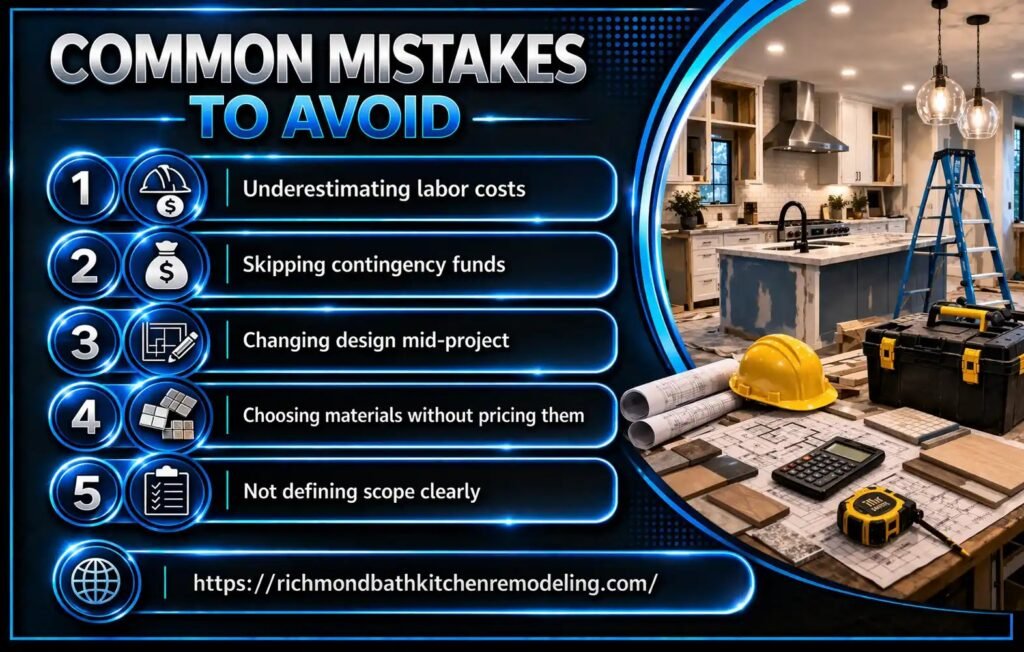
- Underestimating labor costs
- Skipping contingency funds
- Changing design mid-project
- Choosing materials without pricing them
- Not defining scope clearly
These are the main reasons budgets exceed expectations.
Final Thoughts
Estimating your remodeling budget like a contractor means thinking in systems, not guesses. You define scope, apply cost-per-square-foot benchmarks, break costs into categories, and include contingency planning.
This structured approach gives you control over your project and reduces financial risk, whether you are remodeling a single room or renovating an entire home.
FAQs
How do contractors estimate remodelling costs?
They use cost per square foot, detailed cost breakdowns, and contingency planning to create accurate budgets.
What percentage should I set aside for unexpected costs?
A contingency of 10%–20% is standard in most remodelling projects.
Is cost per square foot accurate?
It is useful for initial estimates but should be refined with detailed quotes.
What is the biggest cost in remodelling?
Labour and cabinetry are typically the largest expenses, depending on the project.
How can I avoid going over budget?
Define scope clearly, avoid changes during construction, and work with experienced professionals.