Does the 30% rent rule still apply?
Yes, the 30% rent rule is still commonly used as a guideline, but it does not always work for everyone today. The rule suggests that you should spend no more than 30% of your gross monthly income on rent . However, rising housing costs in many cities mean some renters now spend more than this amount.
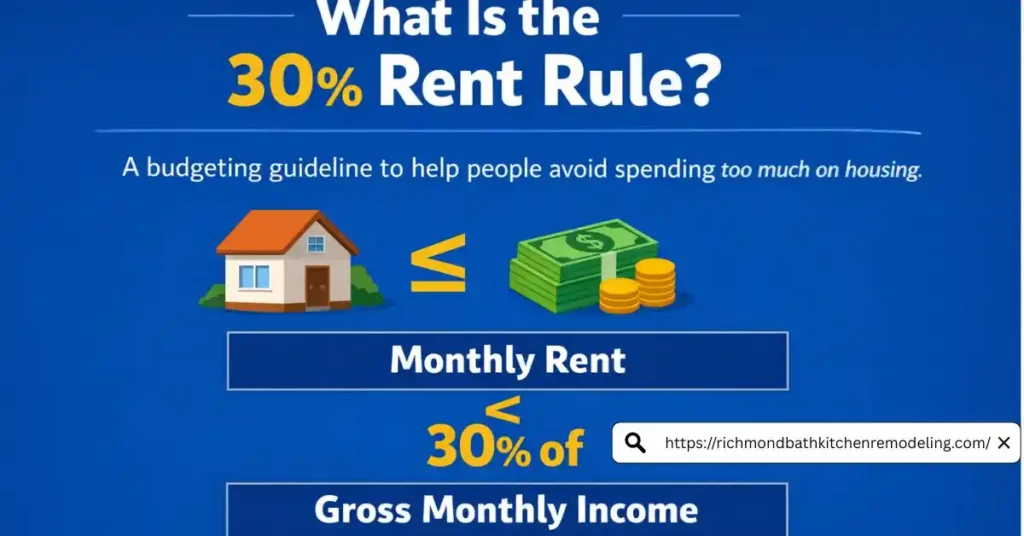
What Is the 30% Rent Rule?
The 30% rule is a budgeting guideline that helps people avoid spending too much on housing.
It means:
Monthly Rent ≤ 30% of Gross Monthly Income
Example:
Monthly income: $5,000 30% of income: $1,500 According to the rule, rent should be $1,500 or less .
Why Was the 30% Rule Created?
The rule was introduced to help households maintain a balanced budget.
Spending less than 30% of income on housing allows people to still afford:
Food Transportation Healthcare Savings Emergency expenses Financial planners often still use it as a basic guideline.
Why the 30% Rule Is Harder to Follow Today
In many cities, housing costs have increased faster than incomes. As a result, some renters spend 35%–40% or more of their income on rent.
Other factors affecting affordability include:
Higher housing demand Limited housing supply Rising property prices Inflation and living costs Because of these changes, the rule is sometimes adjusted based on personal budgets.
What Is a More Realistic Rent Budget Today?
Many financial experts now suggest using a personal budgeting approach rather than a fixed percentage.
Some people follow ranges such as:
25%–30% of income for comfortable budgets 30%–35% in higher-cost housing markets The right amount depends on income, debt, and lifestyle expenses.
Does the 30% Rule Apply to Homeowners Too?
The same idea is often used when buying a home.
Mortgage lenders frequently suggest that housing costs — including mortgage, taxes, and insurance — should stay around 28%–30% of gross income .
This helps keep monthly payments manageable.
How to Decide What Rent You Can Afford
Instead of relying only on the 30% rule, consider:
Total monthly income Debt payments Utilities and transportation costs Savings goals Emergency funds A budget that balances these expenses is usually more realistic than a strict percentage rule.
Frequently Asked Questions